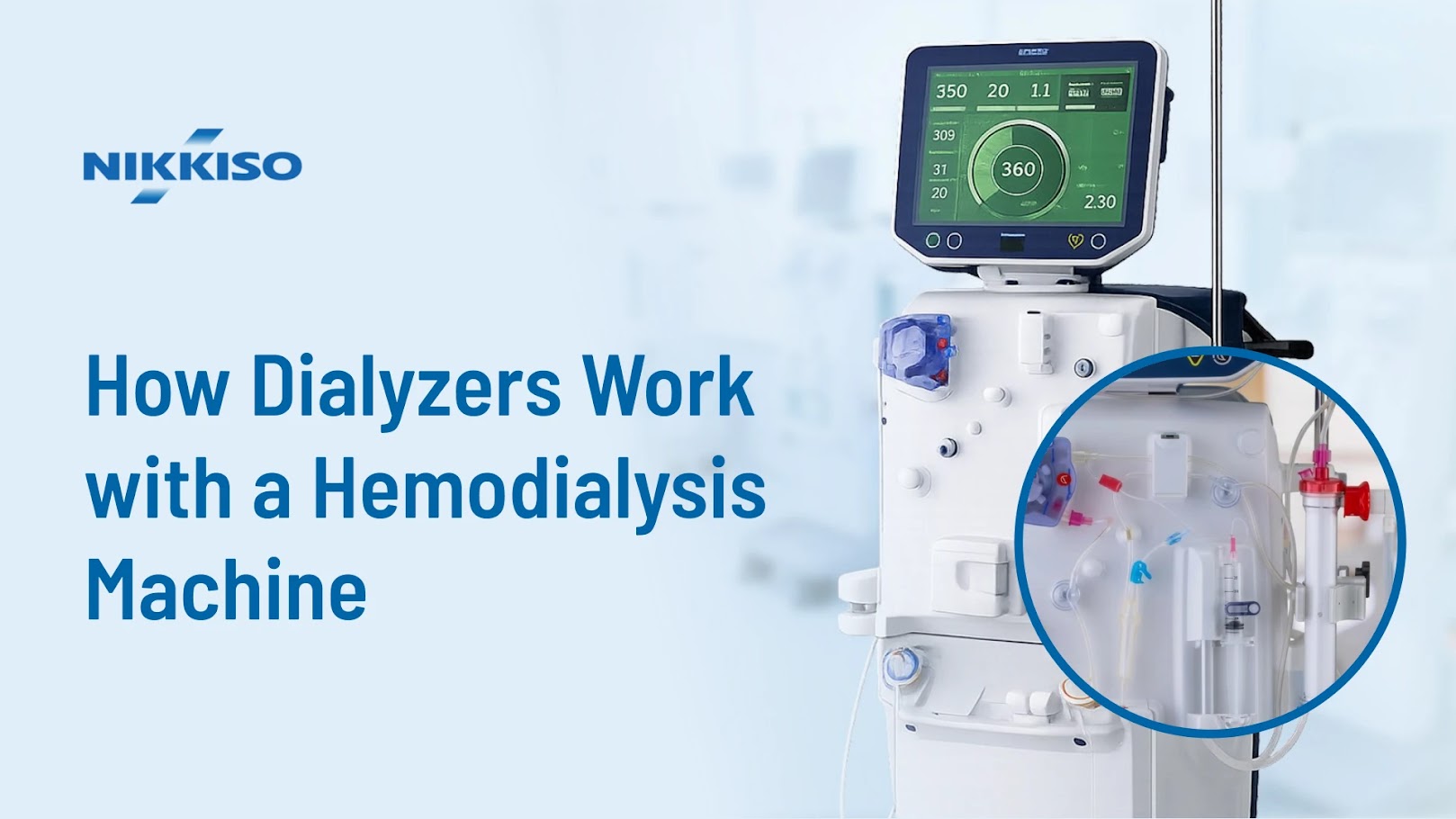
The Core Components of a Dialysis Machine
Every minute of a hemodialysis session, the machine moves almost a pint of blood out of the patient’s body and back again. According to the National Institute of Diabetes and Digestive and Kidney Diseases (NIDDK), an in-center session usually runs about four hours, three times a week. That adds up to roughly 600 hours of treatment per patient each year.
During those hours, the machine pumps and filters blood, prepares the fluid that cleans it, and provides the care team with a steady stream of readings.
What does it take for one system to carry out that work reliably, session after session?
It requires several components working in close coordination, each responsible for a specific part of treatment. For clinical teams and decision-makers alike, a working knowledge of each component of a dialysis machine supports confident therapy management, faster alarm response, and better-informed equipment decisions.

Component 1: The Extracorporeal Blood Circuit
As the first component of a dialysis machine that blood reaches, the extracorporeal circuit carries the patient’s blood out of the body, through the dialyzer, and back again. It connects to the patient through a vascular access: an arteriovenous (AV) fistula, an AV graft, or a catheter. The AV fistula provides the highest blood flow for dialysis and is less likely to become infected or clot. This is important because the performance of the access directly affects how much blood flow the circuit can sustain.
Bloodlines
Bloodlines are the tubing that carries blood between the patient and the machine. Each needle in the patient’s access is attached to a soft tube connected to the dialysis machine. The arterial line carries blood from the access to the dialyzer, and the venous line returns it to the patient. Bloodline sets also include the pump segment, drip chambers, and access ports that connect the circuit’s other components.
Blood Pump
A peristaltic roller pump draws blood into the circuit and pushes it toward the dialyzer. Typical blood flow rates are 300 to 500 mL/min. Clinicians set the rate based on the prescription and what the patient’s access can support.
Pressure Monitors
Pressure is monitored at several points in the circuit. An arterial sensor tracks the negative pressure the pump creates as it draws blood from the access. A prefilter sensor measures the positive pressure between the pump and the dialyzer. A venous sensor, usually located in the bubble trap (venous air-removal chamber), monitors return pressure. A sudden drop in venous pressure can signal a disconnection and trigger a high-priority alarm. Meanwhile, other pressure changes can point to access problems, kinked lines, or clotting in the circuit.
Heparin Pump
Most patients need anticoagulation to keep the circuit from clotting, and unfractionated heparin is the most common choice. A syringe pump delivers it at a set rate, with the dose typically adjusted to keep the activated clotting time at 1.5 to 2 times the normal value.
Air Detector and Venous Line Clamp
Before blood returns to the patient, it passes through a venous air-removal chamber equipped with an air or bubble detector and an automatic line clamp. If air is detected, the clamp automatically closes and the blood pump stops. This safeguard protects the patient against air embolism, which occurs when air enters the bloodstream. It is described as a rare occurrence but is capable of causing hemodynamic collapse and cardiac arrest, which basically makes air detection a core safety requirement in the circuit.
Component 2: The Dialyzer
The dialyzer, often called the artificial kidney, is the component of a dialysis machine where waste removal takes place. Most modern units use a hollow-fiber design, which contains thousands of thin capillary fibers with microscopic pores.
Blood flows through the fibers while dialysate flows around them in the opposite direction. This countercurrent arrangement maximizes the concentration difference between the blood and the dialysate, so that waste products move steadily across the membrane by diffusion. Excess fluid is removed through ultrafiltration, in which hydrostatic pressure moves water across the same membrane. Together, these processes determine how effectively each session clears waste and manages fluid balance.
Component 3: The Dialysate Delivery System
The dialysate delivery system prepares the fluid that draws waste out of the blood and controls its flow through the dialyzer. Dialysate contains sodium, chloride, potassium, magnesium, calcium, and dextrose, along with bicarbonate, a buffer that helps neutralize the acid that builds up in the blood when the kidneys fail. Each of these must be delivered at the prescribed concentration and temperature for every session.
Water Treatment Connection
Water quality is the foundation of safe dialysate. The CDC notes that a patient can be exposed to 300 to 600 liters of water during an average week of hemodialysis, creating multiple opportunities for exposure to waterborne pathogens. The machine therefore draws from the clinic’s dedicated water treatment system, usually reverse osmosis, which forces water through a fine membrane to remove dissolved chemicals, bacteria, and other contaminants. U.S. facilities are also strictly required under federal regulation (42 CFR 494.40) to meet AAMI water and dialysate quality standards.
Heater and Deaeration
Dialysate is warmed to near body temperature and degassed before it reaches the dialyzer. This keeps the fluid comfortable for the patient and prevents air bubbles from forming in the dialysate path.
Proportioning System
This unit mixes purified water with acid and bicarbonate concentrates to match the prescription. And because bicarbonate needs vary from patient to patient, precise mixing proportions are very important. Nikkiso’s DBB-06 PRO, for example, monitors bicarbonate before acid mixing, allowing clinicians to set the concentration for each patient.
Conductivity and Temperature Monitors
Conductivity reflects the electrolyte concentration of the dialysate, which makes it one of the most closely watched readings on the machine. If conductivity or temperature drifts outside safe limits, the machine routes the fluid around the dialyzer until it is corrected.
Ultrafiltration Control
This component of a dialysis machine manages how much fluid is removed from the patient over the session. Continuous monitoring of the fluid is necessary because even a small leak in the fluid path can affect how much fluid is actually removed from the patient. Detecting them early helps clinicians keep fluid removal on target and supports more reliable therapy.
Blood Leak Detector
The detector checks used dialysate for traces of blood, which can signal a tear in the dialyzer membrane. An alarm allows staff to act before blood loss becomes significant. However, not every alarm points to a true leak. A report in the Journal of Investigative Medicine High Impact Case Reports notes that air bubbles, sensor damage, hemolysis, or certain medications that discolor the dialysate can also trigger an alert. Hence, knowing these causes allows for faster, more confident troubleshooting during an alarm.
Component 4: Monitoring, Safety, and Control Systems
This component of a dialysis machine oversees every other part of the treatment. It checks the blood pressure and controls blood flow and fluid removal throughout the session. Many modern systems also go further by building dedicated monitoring tools directly into the machine.
Treatment Monitoring
a. Blood volume monitoring:
Blood volume drops when fluid is removed faster than the body can refill the bloodstream. This contributes to intradialytic hypotension, which is a drop in blood pressure during treatment, with reported prevalence ranging from 8 to 40% across studies. Blood volume monitors track relative changes in blood volume during the session, giving clinicians data to support fluid management decisions.
b. Dialysis dose monitoring:
Dialysis dose, expressed as Kt/V, reflects how effectively a session clears urea from the blood. The National Kidney Foundation’s KDOQI guideline recommends a target single-pool Kt/V of 1.4 per session for patients treated three times a week, with a minimum delivered dose of 1.2. Real-time dose monitors estimate Kt/V during treatment, for example by measuring UV absorbance in spent dialysate, so teams can see whether a session is on track before it ends.
c. Blood Pressure monitoring:
Automated, non-invasive readings are taken at set intervals throughout the session. These help staff spot early signs of hypotension and respond promptly.
User Interface and Automated Controls
The touchscreen interface brings prescription settings, real-time readings, alarm displays, and treatment records into a single view. Many systems also automate routine steps such as priming, fluid bolus, and rinse-back. These features are designed to reduce manual tasks and help standardize routine processes across staff and shifts.

Bringing the Components Together
Every component of a dialysis machine has a defined job. The blood circuit moves blood safely, the dialyzer filters it, the dialysate system prepares the fluid, and the monitors keep clinicians informed at each step.
Understanding how these parts work together has practical value across the organization. Nurses and technicians can trace an alarm to its source faster, biomedical teams can plan preventive maintenance with a clearer view of each system, and administrators and procurement staff gain a stronger basis for comparing equipment.
Nikkiso Medical America brings more than five decades of Japanese engineering to hemodialysis, backed by clinical support and training. Learn more about Nikkiso’s hemodialysis solutions, or request a demo to see how the DBB-06 PRO simplifies your hemodialysis workflow.
Frequently Asked Questions (FAQs)
What does the dialyzer do in a dialysis machine?
The dialyzer filters the blood. Waste passes through a semipermeable membrane into the dialysate by diffusion, and ultrafiltration removes excess fluid by applying pressure across the membrane.
What does the blood pump do in a dialysis machine?
The blood pump moves blood from the patient’s access through the dialyzer and back. Clinicians set its flow rate, often between 300 and 500 mL/min, based on the prescription.
What safety features does a dialysis machine have?
Key safety features include arterial and venous pressure monitors, an air detector with a line clamp, conductivity and temperature monitors, and a blood leak detector.